

.
Today’s retreat session for the group in Melbourne will be subtitled “Faith, the most reasonable and sensible way to live”.
However we Christians are not always the best teachers of faith as reasonable and sensible.
What do I mean?
When I use my reason I realise that many of the things I grasp at and grasp after do not deliver the happiness they promise. So why do I continually and even compulsively seek after such mirages?
In my more reasonable moments I can see that these wild-goose-chases are, well, unreasonable.
And faith is reasonable.
And what do I mean by faith being sensible? You will get it if I alter the spelling: sense-able, that is, able to be experienced through the physical senses and the deeper senses of the soul.
Faith is sense-able.
Pope Francis was released from hospital just over a week ago. I’m delighted that we have him for longer, and quite unexpectedly too since many of us were thinking that a Conclave was immanent. Like many of you I look forward to his future writings which no doubt will show the wisdom that often comes through health struggles and a shave with death.
Then I read a few days ago one of Francis’ medical team, the chief doctor I think, commenting:
“We had to choose whether to stop and let him go or force and try all possible drugs and therapies, running the very high risk of damaging other organs. And in the end we took this path,”
Some had commented that of course this is what Catholics do – fight, fight and then fight some more against death. Then people presume that to do anything less than persisting with ‘forcing and trying all possible drugs and therapies’ (the doctor’s words) is required and to do anything less is euthanasia.
Not so.
Given the information we now have about Francis health last month, it would have been perfectly acceptable to let this elderly 88 year-old man die with dignified palliative care.
I must be open here – and share something of a close-to-home-for-me personal experience.
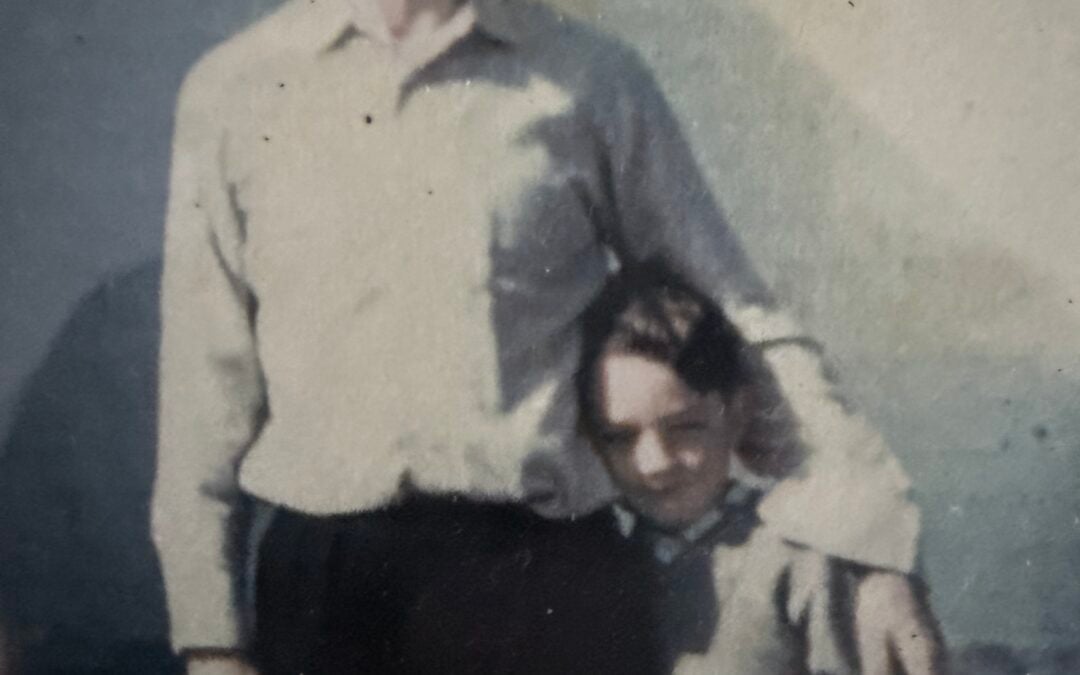
Fifteen years ago my mother died after a difficult and lengthy illness. Nine months later my 74 year-old father was quite suddenly admitted to Intensive Care where the wonderful medical staff did all they could for three months as one illness uncovered another problem which revealed a further difficulty.
After almost three months in ICU the hospital staff explained they had done everything they could and my father was moved to a hospital ward where he died a few days later, a few hours short of my mother’s first anniversary of death.
Many of you have been through similar trauma. It’s not easy for the person themselves, for families, nor for the dedicated medical staff. But such lengthy (100 day) intensive treatment of a man who was at the end of his earthly life and ready to die is not required.
It is different for a young person. Long – term hospital care in the hope of and progressing towards recovery is appropriate and often necessary.
It was some years later when I realised that it would have been perfectly acceptable for my father’s medical team to explain to us after perhaps a week that my father’s body was indicating he was dying and that we should arrange for his palliative care.
This is NOT euthanasia.
The reason this is important is that many will assume that the level of hospital care provided for Pope Francis is what Catholics are expected and even required to do. It is no surprise that people struggle with this. While people of faith do not actively take steps to bring about death, it is never expected that we will take the extraordinary steps that were taken with Pope Francis and with my father.
When I read the doctor’s comment a few days ago I felt a clarification was needed – adding that if the medical staff had decided (in the doctor’s own words) “to stop and let him go” that decision would have been completely and faith-fully reasonable.
While we leave the timing of death to God, death is not the enemy for a person of faith.
Now that’s is reasonable, sensible and faithful.
Image above –
the cross of green which we used rather than flowers
on my father’s coffin, then on his grave.
Send your date and time to add to the list, and just turn up at at one of the advertised gatherings, just one hour, focussing on where we are encountering Christ.
CHRISTCHURCH
Monday 7 April 10.00am (& every Monday)
Moku cafe, Bush Inn Centre Waimairi Road.
Invitation from Trish
NEW PLYMOUTH
Thursday 10 April, 10.00am, (note change of day)
Stumble Inn, 200 Mangorei Road New Plymouth
Invitation from Joan




So very true Fr John. Thanks.
It had seemed to me the reported focus on praying intensly for Pope Francis’ survival made a mockery of our what our belief is about.
I didn’t hear the conversation between the doctor and my mother but he left her room and told us “that she just wants to die”. Mum, aged 85, didn’t ‘just want to die’, she really enjoyed living but she wasn’t ‘afraid to die’. She had a strong faith and if God was calling her home then she accepted his call.
‘Wanting to die’ and ‘not being afraid to die’ are two very different things, which this particular doctor didn’t understand.
Thank you for this lesson today. Having sat with and cared for both of my beautiful in-laws in the days leading up to their passing your words touched home for me.
Thank you,
I totally agree,
“While we leave the timing of death to God, death is not the enemy for a person of faith.”
Death where is thy victory where is thy sting – having seen it many times, the body’s disposition is to heal itself for as long as possible – indeed curative medicine and medical interventions rely on this principle – love your body even in sickness it’s working hard for you
Fr John I am glad you have clarified this challenge, which some of us may experience towards the end of our lives or our loved ones. I was watching a program this week called ‘ 24 Hours in Emergency’ and one of the doctors was saying ( direct to viewers) that 100 years ago if we had broken our leg , the chances of survival would be very limited. I don’t think antibiotics had not been discovered then.
Medical science has now advanced to the the point that the dilemma you have talked about here may confront us in our journey through life!
What we need to remember is that the person themselves do have a say in this. I recently worked with a priest who, although dying, refused almost to the end to give up fighting though none of us thought it was a good idea, including the oncology team. We couldn’t force him to stop treatment. He finally came to the decision himself after the visit from another priest who asked him, “Where is your faith ?” Once he surrendered, and stopped fighting, he found peace.