

.
I’m in the Philippines for a few days this week for a couple of retreats. Yesterday I spent a few hours with a wonderful group in Manila, conversation centred on personal experience of Christ not as a memory of recent months or years past but in this present week, here and now.
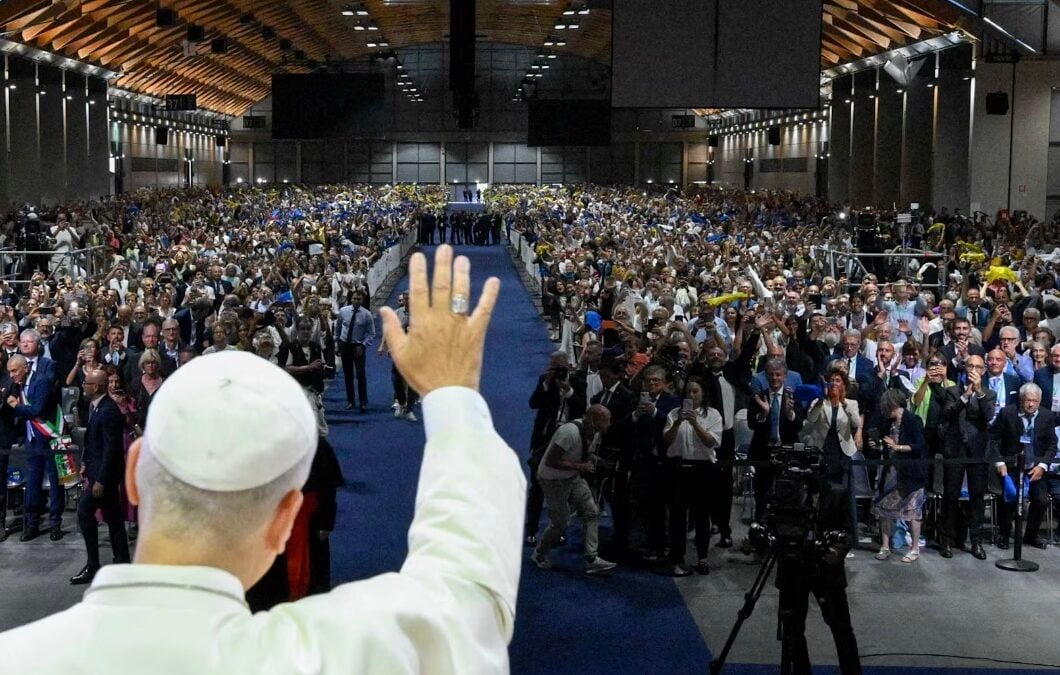
As always wherever people of this great land are gathered there are photos, many many photos, and when a pic of the full group was posted online later yesterday one person who wasn’t present commented “magnificent humanity.”
That’s what Pope Leo is writing about in his Encyclical Letter published this week, Magnifica Humanitas, on Safeguarding the Human Person in the time of Artificial intelligence.
Knowing Gabriel (who posted the comment) I have no doubt about the point he was making and I look forward to chatting with him about this when we meet this weekend at the GenSan retreat.
In recent days many Church websites, leaders and commentators have flooded Social Media with links to the Encyclical commenting simply that it’s worth reading. So it was refreshing to read yesterday in Anglican E-Life Bishop Peter Carrell offering his comments, clearly after reading and carefully considering Pope Leo’s text.
Bishop Peter writes:
Yesterday, Pope Leo published his first Encyclical (i.e. highest level of papal teaching short of formal, infallible pronouncements), Magnifica Humanitas. This encyclical is available to read/download here. Pope Leo’s purpose in this document is to “ask God for the wisdom to interpret the great trends of our time, particularly technological advances. In recent years, it has become increasingly evident how rapidly and profoundly digitalization, artificial intelligence (AI) and robotics are transforming our world”.
What unfolds in Magnifica Humanitas is theological engagement not only with the challenges and opportunities AI poses for humanity, but also with the challenges of this era for humanity to achieve the grandeur that God intends for us. Challenges such as war, modern slavery, and threats to democracy and the telling of truth in our societies are also discussed. Among things to catch my eye are the following: a great theme through this encyclical, drawn from Pope Paul VI’s, is the desirability of human civilisation being “the civilization of love”; the incompatibility of slavery in any and all forms, ancient and modern with the civilisation of love; a striking, summary description of a great challenge in the world of AI: “The dignity of work at a time of digital transition”; penetrating analysis of the potential of AI for good and for evil:
“The use of digital platforms and AI systems is driving profound changes in public and political communication. Tools that could foster dialogue and participation are often used to construct distorted narratives and blur the boundaries between truth and falsehood, mixing facts with opinions. Disinformation did not begin with AI, yet today it finds a powerful amplifier in AI. The ability to manipulate content, images and videos exposes people to biased or misleading perspectives. This problem has both cultural and moral dimensions, since the quality of public communication depends directly on social trust and, in turn, shapes it” (from Section 132).
Finally, among many brilliant paragraphs, I note this one to you:
“In the era of artificial intelligence, when human dignity is threatened by new forms of dehumanization, ours is the pressing duty to remain profoundly human. We must lovingly safeguard the grandeur of humanity bestowed upon us and revealed in its fullness in Christ, the splendor of which no machine can ever replace. True progress always stems from a heart open to others, an intelligence willing to listen and a will that seeks what unites rather than what separates” (from Section 15).
Official & complete text of Magnifica Humanitas at this link.




Thank you Father for giving us your comments and (and Bishop Carrolls) on the Popes first encyclical. I am particularly pleased with the link you have given and it will spur me on to read Pope Leo’s encyclical over the Kings weekend!! Blessings and prayers for you and the Filipino retreatants and all the Filopino people that you meet!
Thank you for the motivation to read the Popes encyclical..
I too thank you for sending this through to me and for the link that you have given us. Blessings on this Kings birthday weekend. How wonderful for the people of the Philippines to have you there giving them a retreat. And I’m guessing it will be a rich experience for you too