
.
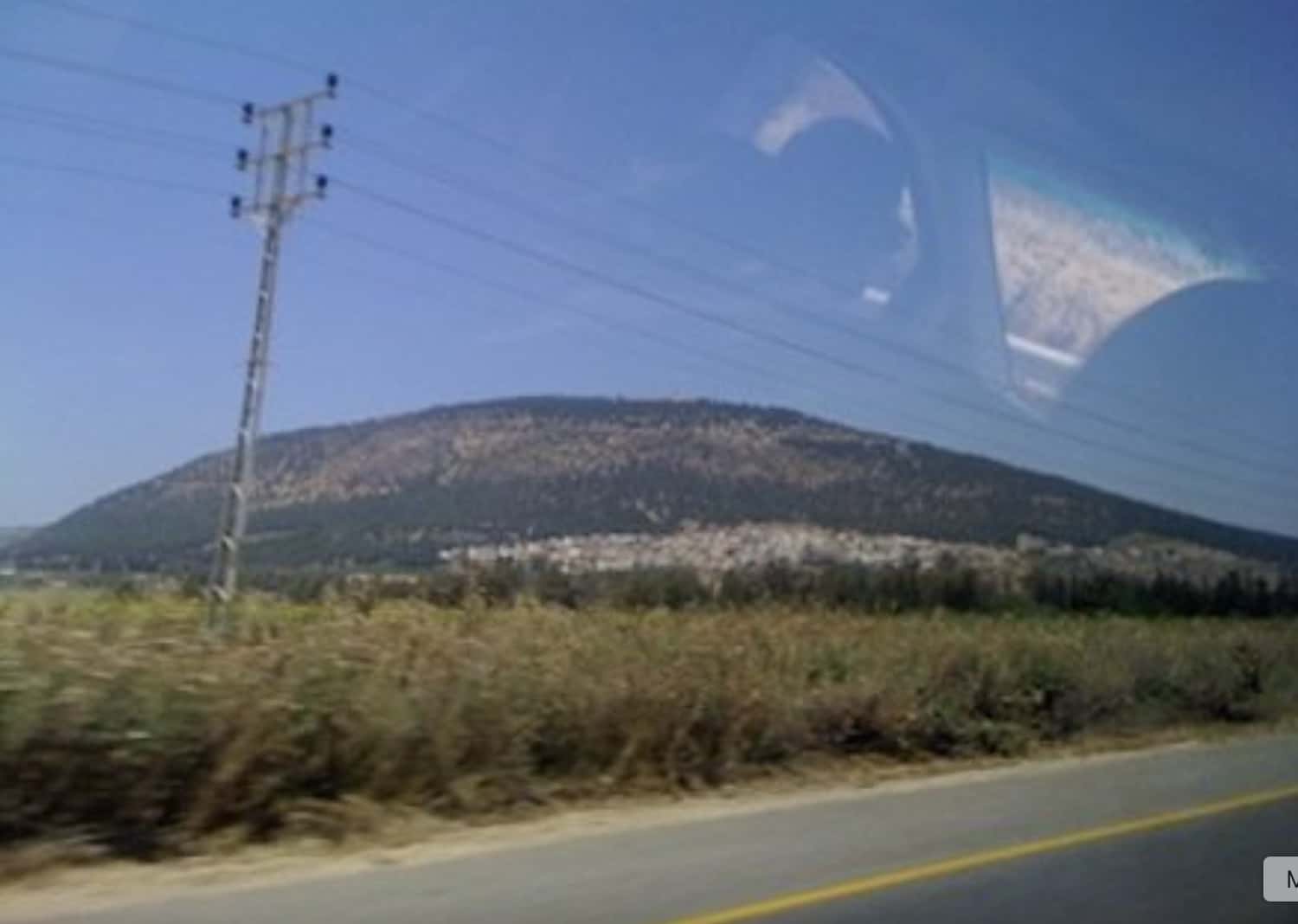
A few years ago with a group of pilgrims I visited the Mount of the Transfiguration. It is not too far from the Sea of Galilee, and from every direction it rises distinctively from the plain landscape as a solitary hill.
I took the picture above from the bus window.
When thinking of the mount of the Transfiguration we might imagine images of light shouting divine presence and pious feelings, I was moved on my visit by the ordinariness of the place – the shrubbery and views which would have been there two thousand years ago, but also the modern-day tar-seal road bordered by poles carrying power and telephone lines.
In a similar way, the account of the Transfiguration of Jesus rises up as if from nowhere in the Gospels, breaking into the ordinariness of life.
We have Jesus preaching, teaching and performing miracles that have an effect on some but not on others, then, all of a sudden Jesus is speaking with the Old Testament prophets Moses and Elijah and his clothes become ‘dazzlingly white, whiter than any earthly bleacher could make them’.
Our contemporary and practical minds might prefer to dismiss the Transfiguration of Jesus as a bit of unnecessary magic. Perhaps our attachment to our own limited and safe vision dismiss such a pragmatic response.
The Transfiguration of Jesus is the event that opens the door between earthly ordinariness, (days and weeks of routine and mundane and struggling existence), and the divine eternity. In this moment Peter, James and John got a taste of something more; so much so that they could not even put it into words and did not speak of the event when they went down the mountain.
For those who look beneath the surface of things every day is rich with such divine experiences, moments when the door between heaven and earth is thrown open by God. We express our struggle and our sin and God pours grace onto us and into us.
Once again we realise that we are participants in the divine life of God.
This is not the result of anything that we have done. We simply stay with our yearning for hill-top existence when we are down in the valleys, and even in the pits, and Jesus comes to us.
After such moments we are changed. Like Peter James and John we struggle to put this into words. We are not even really sure what has happened, nor even if anything has happened.
The fact is, we have tasted heaven and in the most tangible form of communion, heaven has come INTO us. We are different, we are made beautiful, and because of this, even though we return to the same reality and relationships, every moment ahead is transformed.
This foretaste of heaven enables us to live fully in every earthly situation.

I love your explanation of the transfiguration father John, especially relating it to our everyday relationship with God our Father!
Thank you for a wonderful description of God entering our lives in everyday miracles. Those moments of wonder and awe keep us on track and encourage us. God bless.
I find it quite interesting that in the photo, the mount looks quite uneventful, quite mundane and ordinary, yet a glorious thing happened there. Yet we humans often look for glorious things or events in equally glorious looking places.
As always John, another very inspiring and very helpful reflection. A great reminder to me of how close God is in my ordinary day to day life. Thank you.