

/
RSS Feed
Read the scriptures for the Second Sunday of Easter, Divine Mercy Sunday, at this link.

Food for Faith now offers three podcast series. View all podcasts >
Read the scriptures for the Second Sunday of Easter, Divine Mercy Sunday, at this link.
Read the scriptures for the Mass of Easter Sunday morning at this link.
Join Rory Paterson & John Kleinsman in conversation with John O’Connor reflecting on the scriptures for Easter Sunday – 20 April 2025.
John K quotes from Middlemarch by George Eliot (pen name) of Mary Ann Evans
https://www.opendemocracy.net/en/on-visiting-forgotten-tombs/
“What Eliot understood was that an ethics of social participation is not only dependent on abstract ideals, imagination and vision – Shelley’s argument in A Defence of Poetry – it is both sited and situated, enacted in the small and intimate moments of everyday life in which an idea or vision is turned to practical politics.
Of course, the only examples that we can know are those that have been documented by historians, passed down in folklore or across generations of family history … but many of us know that the actions of a good teacher, a kind aunt or helpful stranger changed or enhanced the course of a life. A good life, in this context, is not immortalised in either great poetry or grand monuments to heroic people but is defined by how we go about our daily lives, our unremarkable habits and routines of life. The moment of death marks the beginning of being forgotten. People may be unremembered and their tombs unvisited, Eliot suggests, but their acts are all the more significant because they have participated in her optimistic vision of ‘the growing good of the world’ through small gestures and quotidian practices.
It is this sense of lives that are lived and forgotten that is perhaps felt most acutely in an abandoned graveyard; the dash that separates two dates on a tombstone symbolises, as the poet Sylvia Plath observed, the whole span of a life. Visiting unvisited tombs presses political questions about an everyday ethics of participation, about what we are each doing in the dash – the dent marked in stone– the time between the date we already know and the unknown date that will balance the asymmetry.”
Read the scriptures for Tuesday of Holy Week at this link.
Read the scriptures for Monday in Holy Week at this link.
Read the scriptures for Palm Sunday Mass at this link.
Read the scripture for Saturday of Week Five in Lent at this link.
Read the scriptures for Friday of Week Five in Lent at this link.
Join Jelvine Cortez, John Kinder & Catherine Gibbs in conversation with John O’Connor reflecting on the scriptures for Palm Sunday.
Read the Palm Sunday scriptures at this link.
Jelvine mentions Pope Benedict’s Encyclical letter Saved by Hope which you can find at this link.
Read the scriptures for Monday Week Five in Lent at this link.
Latest Blog Posts

A healthy happy human person is a sign-post that points to God.
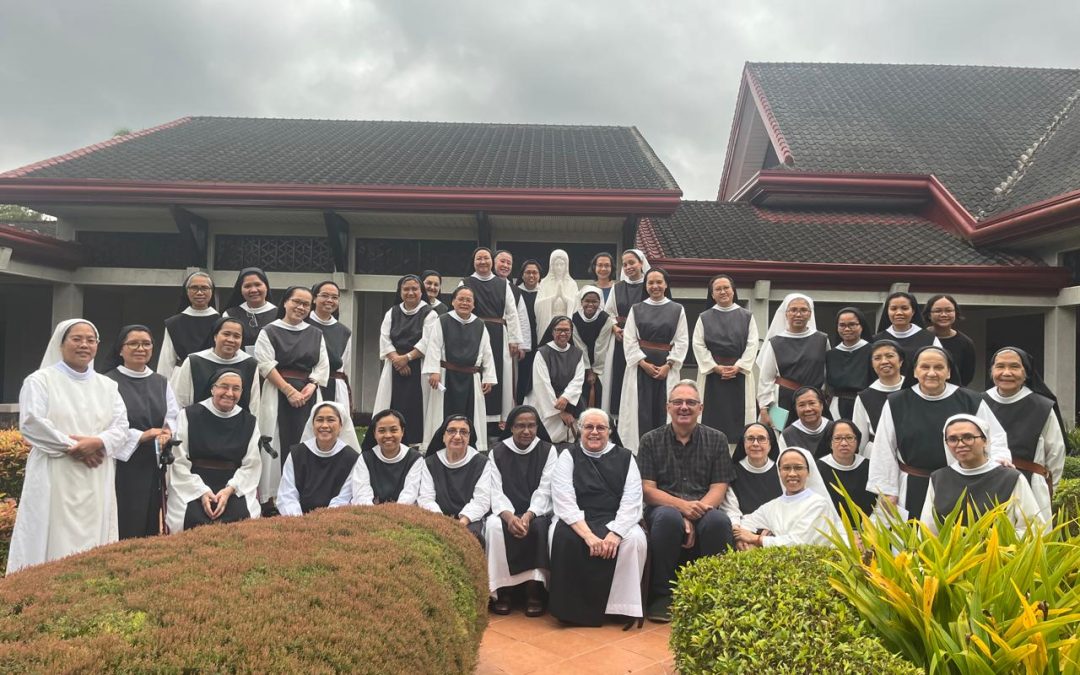
life in silence and prayer within a physical cloister enclosure might seem to some rather restricted and unfree.

A Diocesan Priest belongs not in a monastery-cloister but in the neighbourhoods of the people.
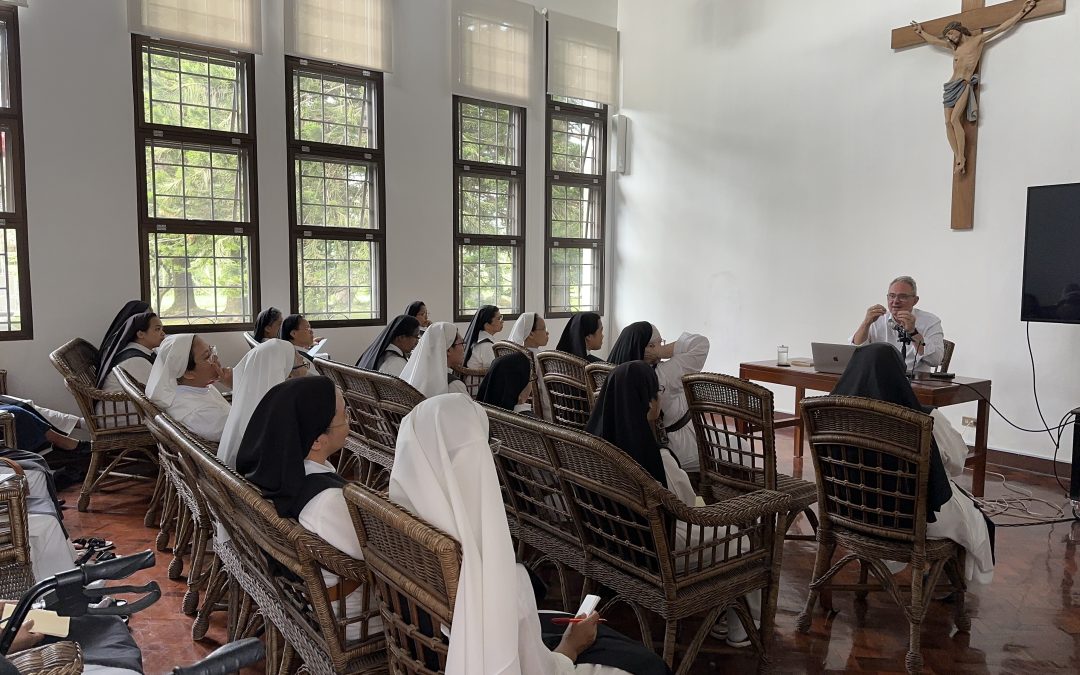
The name God will give you for ever will be Peace through Integrity.

The world as the theatre of human history, where God and people live together.